
The Complete Guide to Disneyland Paris with a Neurodiverse Child
Planning Disneyland Paris with an autistic or neurodiverse child? Discover UK travel options, accessibility passes, sensory tips, hotels, rides and food advice.
DISNEYLAND PARIS
7/27/202620 min read
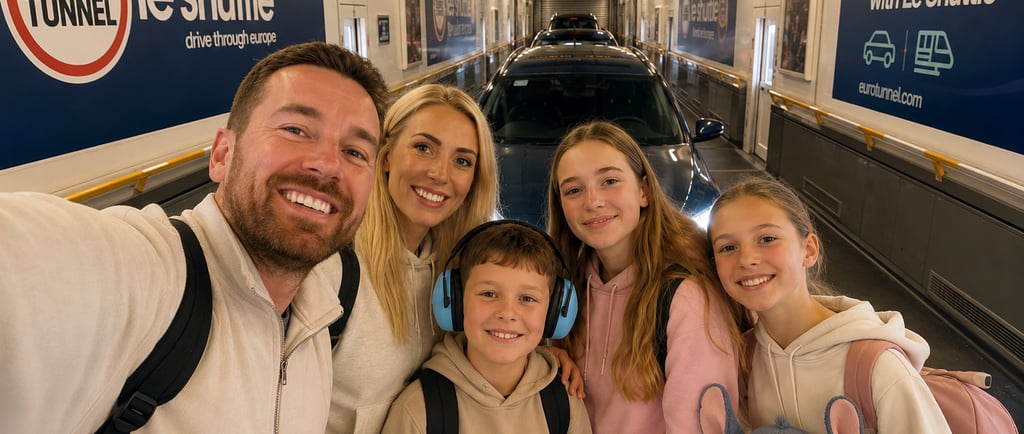
A family holiday to Disneyland Paris can be incredibly exciting. There are favourite characters, colourful parades, themed hotels, familiar stories and the chance to see Sleeping Beauty Castle for the first time.
However, visiting Disneyland Paris with an autistic child or another neurodiverse family member can also feel overwhelming before you have even booked.
You may be wondering:
Will my child cope with the crowds?
Are the rides very loud?
What happens if they cannot wait in a standard queue?
Is there anywhere quiet to take a break?
Will we find food they are willing to eat?
How should we travel to Disneyland Paris from the UK?
Is Disneyland Paris genuinely suitable for autistic children?
These are reasonable concerns. Disneyland Paris is a busy theme-park resort filled with music, announcements, queues, characters, bright displays and people moving in every direction. Even a child who loves Disney may struggle with the sensory and emotional demands of the parks.
That does not mean you should automatically rule it out.
With sensible preparation, carefully chosen accommodation and realistic expectations, Disneyland Paris can be a brilliant destination for many neurodiverse families.
The most important thing is to plan the holiday around your child rather than trying to recreate the packed itineraries you may have seen online.
Before booking, you may find it helpful to read my guide to preparing your neurodiverse child for going on holiday. It includes practical advice about countdowns, visual schedules and helping children understand what is going to happen.
Is Disneyland Paris autism friendly?
There is no simple answer because autistic and neurodiverse children all have different needs.
One child might happily spend an entire day riding roller coasters and meeting characters. Another may enjoy looking at the castle but find indoor rides, parades and restaurants too overwhelming.
Disneyland Paris provides accessibility services for eligible visitors, including Priority Cards and Easy Access Cards. It also has clear maps, accessible hotel options, first-aid facilities and Cast Members who are accustomed to welcoming visitors with a wide range of needs.
However, it is still a large and stimulating resort. Accessibility support can make the visit easier, but it cannot remove every queue, noise, crowd or unexpected change.
A successful holiday might involve:
Visiting only a few attractions each day
Returning to your hotel every afternoon
Skipping the nighttime show
Eating familiar food in your room
Watching characters from a distance
Spending time at the hotel pool
Repeating one favourite ride rather than trying everything
Success should be measured by how safe and comfortable your child feels, not by the number of attractions you complete.
Preparing a neurodiverse child for Disneyland Paris
Preparation can make Disneyland Paris feel much more predictable.
Start talking about the holiday several weeks or months before you travel, depending on how your child responds to advance notice. Some children enjoy a long countdown, while others become anxious if they are told too early.
You could use:
A visual countdown calendar
Photographs of the hotel
A simple map of the parks
Videos of the rides
Videos showing the Eurotunnel, ferry, airport or train
A social story about arriving at Disney
A daily visual timetable
Pictures of the characters
A list of attractions your child may want to try
A clear explanation that plans sometimes change
Ride videos are particularly useful because they can show darkness, movement, drops, loud effects and character models. They cannot reproduce the full sensory experience, but they can help you identify attractions that are unlikely to be suitable.
Try not to promise that a particular ride or character will definitely be available. Attractions can close temporarily, queues can become too long and character schedules can change.
Instead of saying, “We will meet Mickey at ten o’clock,” you could say, “We are going to see whether Mickey is meeting visitors. If he is not available, we will choose something else.”
That small change can reduce the impact of an unexpected disappointment.
For children who find uncertainty particularly difficult, my guide to managing travel anxiety for neurodiverse kids includes more preparation strategies.
Travelling to Disneyland Paris from the UK
Disneyland Paris is relatively accessible from the UK, but the best journey depends on your starting point, budget and child’s individual needs.
The main options are:
Driving through LeShuttle, formerly commonly called Eurotunnel
Travelling by ferry
Flying to Paris
Travelling by Eurostar and connecting train
None is automatically best for every neurodiverse family.
Driving via LeShuttle
For children who feel secure in the family car, driving through LeShuttle can be one of the most flexible options.
You drive to the terminal in Folkestone, board the train in your vehicle and cross to Calais in approximately 35 minutes. You remain with your car during the crossing, although passengers can get out to stretch their legs. The drive from Calais to Disneyland Paris is then approximately three to three and a half hours, depending on traffic and stops.
Advantages of travelling by car
Driving allows you to:
Pack more sensory equipment
Bring familiar food and drinks
Take bedding or weighted items
Avoid airport baggage limits
Stop when your child needs a break
Control the temperature and noise
Use familiar music or videos
Leave Disney at your own pace
Visit a supermarket before reaching the hotel
The car may also act as a familiar, controlled space during the journey.
If your child becomes overwhelmed at a service station or after arriving in France, they can return to their own seat with their usual blanket, toys and entertainment.
Possible challenges
The overall journey can be long, especially for families travelling from northern England, Scotland or Wales.
You will also need to consider:
Traffic around London and Paris
Motorway tolls in France
Regular rest breaks
Motion sickness
Driving on the right-hand side
The possibility of delays at border controls
The journey back after several tiring days in the parks
Some families split the journey by staying near Folkestone the night before crossing. This can make the travel day more manageable and reduce the pressure of reaching a fixed departure after a long drive.
Pack a separate journey bag so you do not need to unpack the car every time your child needs something.
Include:
Snacks
Drinks
Medication
Ear defenders
A change of clothes
Wipes
Fidget toys
A tablet and charger
Familiar comfort items
Travel-sickness supplies
A simple visual journey plan
Travelling by ferry
The ferry may suit children who dislike remaining in the car for long periods or who enjoy boats and watching the sea.
The Dover-to-Calais crossing generally takes around 90 to 100 minutes, while Dover to Dunkirk takes closer to two hours. Journey times and schedules can vary because of weather and operational conditions.
Once you arrive in France, you continue to Disneyland Paris by car.
Advantages of the ferry
On a ferry, children can usually:
Walk around
Use the toilets
Look outside
Eat at a table
Move away from their car seat
Find a quieter corner if available
For some children, movement makes the crossing easier than remaining inside the car.
Possible sensory difficulties
Ferries can also be unpredictable and stimulating. Potential triggers include:
Engine vibration
Loud announcements
Crowded lounges
Busy restaurants
Strong food smells
Wind on the outside deck
Movement caused by the sea
Queuing to board and leave
Travel sickness
Prepare your child for the fact that you will normally need to leave the vehicle during the crossing.
Ear defenders, familiar food and downloaded entertainment can help. Arriving with enough time to check in is important, but arriving extremely early may create a long additional wait. Operators may advise more time during busy travel periods, so check your sailing instructions carefully.
Flying to Paris
Flying is usually the fastest way to reach Paris, especially for families travelling from Manchester, Birmingham, Bristol, Edinburgh, Glasgow or other parts of the UK outside the South East.
Paris is served by Charles de Gaulle, Orly and Beauvais airports, although Charles de Gaulle and Orly are generally the most convenient for Disneyland Paris.
From Charles de Gaulle, options include:
High-speed TGV train
Magical Shuttle coach
Private transfer
Taxi
Hire car
Disneyland Paris states that the TGV journey from Charles de Gaulle to Marne-la-Vallée–Chessy can take less than 12 minutes. The station is immediately outside the Disney Parks.
That train journey is quick, but the complete airport process may still involve baggage collection, finding the station and waiting for your departure. A pre-booked private transfer can be more straightforward for a child who struggles with changes and multiple stages.
The Magical Shuttle also connects Charles de Gaulle and Orly with Disney Hotels, selected Partner Hotels and the parks.
Advantages of flying
Shorter journey in the air
No need to drive in France
Convenient for northern UK families
Several UK departure airports
Private transfers can take you directly to the hotel
Possible difficulties
Air travel may involve:
Airport security
Passport checks
Unfamiliar toilets
Crowded departure areas
Flight delays
Changes of gate
Restricted movement
Ear discomfort
Loud aircraft noise
Waiting for baggage
Contact your departure airport and airline before travelling to ask what assistance is available. Some airports provide hidden-disability support, quieter security arrangements or familiarisation materials, but services vary.
You can find more detailed advice in these Holidays & Kiddos guides:
Travelling by Eurostar
Eurostar can be a convenient alternative for families who do not want to fly or drive.
At the time of writing, the usual route from London involves travelling from St Pancras International to Lille-Europe and changing for a connecting train to Marne-la-Vallée–Chessy. Disneyland Paris and Eurostar both describe this connecting route, with the fastest total journeys taking around three hours.
The main benefit is that Marne-la-Vallée–Chessy station is at the entrance to Disneyland Paris.
However, the change at Lille may be difficult for children who struggle with:
Moving luggage quickly
Busy railway stations
Platform changes
Uncertainty
Waiting
Sudden announcements
When comparing train options, look carefully at the connection time. A very short connection may create stress, while a very long connection adds more waiting.
Pack essential sensory items in a small bag that stays with your child rather than placing everything in a large suitcase.
Which UK travel option is best?
Choose according to the hardest part of travelling for your child.
LeShuttle may work best when:
The car is a safe, familiar environment
Your child needs lots of equipment
You want control over stops
Luggage limits would be difficult
The ferry may work best when:
Your child needs to move around
They enjoy boats
They cope with public indoor spaces
A longer crossing is manageable
Flying may work best when:
Long car journeys are very difficult
Your child tolerates airports
You live a long way from Folkestone
You can arrange a simple transfer
Eurostar may work best when:
Your child likes trains
You can reach London easily
They can manage the connection at Lille
You want to arrive directly beside the parks
Choosing the best time to visit Disneyland Paris
There is no completely quiet time at Disneyland Paris, but some periods are generally less intense than school holidays, Christmas and major celebrations.
For a neurodiverse family, the best date may depend on more than queue length.
Consider:
Expected crowd levels
Weather
Park opening hours
Seasonal entertainment
Your child’s tolerance of heat or cold
UK and French school holidays
Whether construction or attraction closures would cause distress
January and February can be colder and may have reduced opening hours, but the parks can feel less intense on selected weekdays.
Spring can bring more comfortable temperatures, although Easter and school holidays are busy.
Summer offers longer days but may involve heat, strong sun and large crowds.
September can be a useful balance for families who are able to travel outside school holidays.
Halloween and Christmas are visually impressive but add seasonal music, decorations, shows and crowds. For some children, this creates extra magic. For others, it means extra sensory input.
Check the official park calendar before booking because opening hours, entertainment and attraction closures change throughout the year.
Where to stay at Disneyland Paris
Your accommodation is not only somewhere to sleep. For a neurodiverse family, it can be an essential recovery space.
Consider:
Distance from the parks
Room size
Noise
Transport
Food facilities
Swimming pool access
Whether you can return during the day
Whether your child needs a separate sleeping area
Whether you need a fridge or kitchen
Staying in a Disney Hotel
Disney Hotels offer convenience and theming. Depending on the hotel, you may be able to walk to the parks or use a shuttle.
Being close enough to return for an afternoon break can make a significant difference. Instead of pushing through overload, you can leave the park, rest and decide later whether to return.
Disney Hotel packages commonly include access to both parks, and official hotel information is available through the Disneyland Paris booking system.
Disneyland Hotel
The Disneyland Hotel is immediately beside the entrance to Disneyland Park.
Its location is extremely convenient, particularly if your child needs frequent breaks. However, it is one of the most expensive choices and its detailed royal theming may feel visually stimulating to some children.
Disney Hotel New York – The Art of Marvel
This hotel is within walking distance and may appeal to children who love Marvel.
It is stylish and convenient, but children who are highly focused on Marvel may become very excited by the artwork and character experiences. That can be positive, although it may also make settling at bedtime more difficult.
Disney Sequoia Lodge
Sequoia Lodge has a woodland theme and can feel calmer than some of the brighter Disney Hotels.
The walk is longer than from the Disneyland Hotel or Hotel New York, but many families appreciate its cosy atmosphere and swimming pool.
Disney Newport Bay Club
Newport Bay Club is a large hotel with a nautical theme.
It can be a good choice for families wanting a pool and more traditional hotel facilities, although its size means some rooms may be a considerable walk from reception.
Disney Hotel Cheyenne
Hotel Cheyenne has strong Toy Story and Wild West theming.
Children who love Toy Story may find it exciting and familiar. The room blocks are spread across the site, so request a suitable location if long walks are difficult.
Disney Hotel Santa Fe
Hotel Santa Fe is often one of the more affordable Disney Hotels.
It has colourful Cars theming and shuttle access. The bright design may delight some children but feel busy to others.
Disney Davy Crockett Ranch
Davy Crockett Ranch provides self-catering cabins in a forest setting.
This can suit families needing:
More personal space
Separate sleeping areas
A kitchen
Familiar meals
A quieter evening environment
Parking beside or near the accommodation
It is approximately 15 minutes from the parks by car and does not have a Disney shuttle service, so you need your own vehicle.
For some neurodiverse families, this combination of Disney access and a quieter self-catering base works extremely well.
Les Villages Nature Paris
Les Villages Nature Paris offers apartments and cottages alongside a large indoor water park and other resort facilities.
It may be suitable if you want rest days away from Disney, although the water park itself can be busy, noisy and visually stimulating.
The resort is around 15 minutes from Disneyland Paris by car, and paid public transport is available.
Partner Hotels and off-site accommodation
Partner Hotels can be less expensive and generally include shuttle transport, although travelling on a crowded bus at opening or closing time may be difficult.
An off-site apartment can provide:
A kitchen
A washing machine
More room
Familiar breakfasts
A quieter environment
Better options for restricted diets
The disadvantage is that returning for a short break may take longer.
Before deciding, read private villas versus hotels when travelling with an autistic child and all-inclusive versus self-catering holidays with a neurodiverse child.
Disneyland Paris accessibility cards
Disneyland Paris currently offers two main access arrangements: the Priority Card and the Easy Access Card.
Priority Card
The Priority Card is available to visitors with an officially recognised disability who can provide accepted evidence.
It provides priority access, rather than guaranteed immediate access, at participating attractions and may also apply to theatres, outdoor shows, parades, character encounters and certain restaurant or shop checkouts. Visitors can apply online from one month before their visit and collect the card at designated locations.
You must bring an original accepted proof of disability and identification when collecting the card. Check the official list for the UK before travelling, as evidence requirements may change.
Do not assume that a diagnosis letter, school document or general medical letter will automatically be accepted.
Easy Access Card
The Easy Access Card is intended for visitors with one of the recognised long-term chronic conditions listed by Disneyland Paris.
It normally uses a return-time system at attractions rather than providing immediate access. Supporting medical evidence meeting Disney’s requirements is needed.
The Easy Access Card is not simply a general alternative for anyone who dislikes queueing. Eligibility and evidence are assessed according to the official rules.
Important expectations
Neither card means that your family will never wait.
You may still wait:
At security
At restaurants
For hotel transport
Before a show begins
In shops
While an attraction is temporarily unavailable
At card-access entrances during busy periods
Prepare your child for some waiting and carry activities that can be used during short delays.
Using the Disneyland Paris app
The official Disneyland Paris app can help you:
Check attraction wait times
View maps
Find toilets and restaurants
Check show schedules
Manage bookings
View character information
Check attraction restrictions
Use available ordering or reservation features
Do not rely entirely on your mobile phone. Batteries drain quickly when you are checking the app, taking photographs and using digital tickets.
Carry a portable charger and take screenshots of important information where appropriate.
For a child who becomes distressed by repeated changes, avoid constantly announcing every alteration in wait times. Use the app quietly to make decisions, then present one or two clear options.
Sensory considerations inside Disneyland Paris
Disneyland Paris can be stimulating from the moment you arrive.
Possible triggers include:
Music playing throughout the parks
Sudden announcements
Crowds moving in different directions
Character costumes
Strong food smells
Dark rides
Flashing lights
Water effects
Unexpected ride stops
Fireworks
Parade music
Excited screaming
Queues with limited personal space
Even positive excitement can contribute to sensory overload.
A child may appear happy during the morning and then suddenly become unable to cope later. The trigger may not be one specific event but the accumulated effect of several hours of sound, movement, decisions and social demands.
Schedule breaks before your child reaches that point.
Disneyland Park sensory overview
Main Street, U.S.A.
Main Street is colourful, musical and often crowded, particularly at opening time, before parades and at park closing.
Potential triggers include:
Music
Horse-drawn vehicles
Crowds
Shop displays
Parade preparations
Sudden character appearances
The covered arcades running behind the shops can provide an alternative route when the main street is busy, although they are not guaranteed to be silent or empty.
Fantasyland
Fantasyland has many visually familiar rides and is often popular with younger children.
Gentler attractions include:
“it’s a small world”
Le Carrousel de Lancelot
Casey Jr. – le Petit Train du Cirque
Le Pays des Contes de Fées
However, “gentle” does not always mean sensory neutral.
“it’s a small world” includes repetitive music, bright scenes and moving dolls. Peter Pan’s Flight is dark and elevated. Snow White and Pinocchio contain dark scenes and potentially frightening imagery.
Adventureland
Adventureland has winding paths, caves and shaded areas.
Adventure Isle can offer more freedom of movement than a formal queue, but caves and bridges may feel disorientating.
Pirates of the Caribbean includes:
Darkness
Drops
Loud effects
Skeleton imagery
Water
Strong visual scenes
Watching a ride video may help, but be aware that videos rarely capture the volume and darkness accurately.
Frontierland
Frontierland has wider outdoor spaces in some areas and attractive views around the water.
Big Thunder Mountain is fast, loud and includes dark tunnel sections. Phantom Manor is intentionally eerie, dark and filled with supernatural imagery.
A child who enjoys spooky themes may love Phantom Manor, while another may find the atmosphere upsetting before even boarding.
Discoveryland
Discoveryland includes science-fiction theming, electronic sounds and several stimulating attractions.
Buzz Lightyear Laser Blast may appeal to children who enjoy interactive games, but it includes darkness, noise, spinning vehicles and flashing targets.
Star Tours uses motion simulation, large-screen imagery and sudden movements.
Star Wars Hyperspace Mountain is a high-speed indoor roller coaster with darkness, inversions and loud effects.
Disney Adventure World sensory overview
During 2026, the second park is undergoing its transition and expansion from Walt Disney Studios Park towards Disney Adventure World. Check official information close to your visit because openings, routes and attraction access can change.
The park includes highly themed areas and several attractions with strong sensory elements.
Worlds of Pixar
Ratatouille: The Adventure uses large screens, 3D effects, movement and changes in scale. Some children love the immersive experience, while others experience motion sickness or become disorientated.
Crush’s Coaster combines darkness, spinning and roller-coaster movement. It is considerably more intense than its colourful Finding Nemo exterior may suggest.
Cars ROAD TRIP is generally slower, but one scene includes fire, water and loud effects.
Marvel Avengers Campus
Avengers Campus can be exciting for Marvel fans but may also be loud and busy.
Avengers Assemble: Flight Force is a fast indoor roller coaster with darkness and intense movement.
Spider-Man W.E.B. Adventure is interactive and energetic, with screens, sound effects and repeated arm movements.
The Twilight Zone Tower of Terror
Tower of Terror includes:
A deliberately unsettling storyline
Darkness
Sudden drops
Loud sound
Suspense
Unpredictable movement
It may be unsuitable for children who struggle with fear, loss of control or sudden physical sensations.
Attractions that may suit sensory-sensitive children
No ride can be guaranteed suitable, but some families may find the following easier:
AttractionMain sensory considerationsLe Pays des Contes de FéesOutdoor boat ride with gentle movementCasey Jr.Outdoor train with mild speed and elevated sectionsLe Carrousel de LancelotRepetitive circular movement and musicDisneyland RailroadTrain noise, whistles and periods of waitingOrbitronHeight, spinning and open-air movementCars ROAD TRIPSlow vehicle but includes one loud effects sceneAdventure IsleUneven paths, caves, bridges and less structured movementAlice’s Curious LabyrinthOutdoor maze, colourful scenery and possible crowding
Always check current attraction information and height restrictions before visiting.
Attractions that may be more intense
AttractionPossible triggersStar Wars Hyperspace MountainDarkness, speed, inversions and loud effectsBig Thunder MountainSpeed, tunnels, drops and loud movementIndiana Jones and the Temple of PerilOutdoor roller coaster with inversionCrush’s CoasterSpinning, darkness, speed and dropsTower of TerrorSuspense, darkness and sudden dropsAvengers Assemble: Flight ForceHigh speed, inversions and darknessStar ToursMotion simulation, screens and loud effectsPhantom ManorDark themes, ghosts and unsettling scenesPirates of the CaribbeanDarkness, drops, skeletons and loud effectsRatatouille3D screens, movement and possible motion sickness
Character meetings
Character meetings can be magical, but not every child will want close physical interaction.
Large costumed characters may be very different from how they appear on television. They cannot usually speak, their faces do not move and they may approach with large gestures.
Let your child decide how close they want to be.
Possible alternatives include:
Watching from outside the queue
Waving from a distance
Standing beside a parent
Taking a photograph without physical contact
Meeting a face character rather than a costumed character
Skipping the interaction completely
Tell the Cast Member if your child needs more space or does not want a hug.
Parades and nighttime shows
Parades combine music, crowds, characters and large moving floats.
People often begin saving spaces well before the parade, which can create long periods of waiting and reduced personal space.
Consider watching from a less central position, even if the view is not perfect. Being able to leave easily may matter more than being at the front.
The nighttime spectacular around Sleeping Beauty Castle can be extremely loud and visually intense. It may include fireworks, projections, music, drones or other effects depending on the current programme.
Options include:
Using ear defenders
Watching from farther away
Standing near an exit route
Watching on only one evening
Leaving before the show begins
Returning to the hotel instead
Skipping the nighttime show does not mean the holiday has failed.
Quiet breaks and regulation
Disneyland Paris does not have a completely silent, permanently empty sensory room in every area of the parks.
Instead, look for comparatively calmer spaces and be prepared to leave the park if your child needs genuine quiet.
Potential break ideas include:
The covered arcades beside Main Street
Less crowded outdoor pathways
A quiet restaurant at an off-peak time
The hotel lobby during the day
Your hotel room
A walk around Lake Disney
Sitting away from the main parade route
Returning to your car if you have driven
Ask a Cast Member for help if your child is distressed. They may be able to direct you towards a less busy nearby location.
Eating at Disneyland Paris with a neurodiverse child
Food can be one of the most stressful parts of any holiday, especially when a child has a restricted range of safe foods.
Disneyland Paris offers:
Quick-service restaurants
Buffet restaurants
Table-service restaurants
Character dining
Hotel restaurants
Food stalls
Disney Village restaurants
Familiar options may include chips, pizza, pasta, burgers, bread, fruit and desserts, but menus change.
Do not assume that every restaurant will have your child’s preferred food. Check current menus before travelling and identify several backup options.
Buffets provide choice and allow children to see the food before selecting it. However, they can also be noisy, busy and full of smells.
Table-service restaurants may feel calmer, but meals take longer and children may struggle with waiting.
Quick-service meals are faster, although seating areas can be crowded at standard meal times.
Useful strategies include:
Eating lunch earlier than usual
Booking table-service meals in advance
Carrying familiar snacks
Choosing accommodation with a kitchen
Visiting a supermarket before arrival
Using photographs of restaurant interiors
Keeping one meal each day simple
Avoiding character dining if characters would cause anxiety
For more detailed food advice, read neurodiverse kids and fussy eating on holiday.
Rider Switch and splitting up
Not every family member needs to experience every attraction together.
Where available, Rider Switch can help adults take turns experiencing an attraction when a child cannot or does not want to ride. Ask the Cast Member at the attraction entrance how the current arrangement works.
Splitting up can also reduce pressure.
One adult might take an older child on a thrill ride while another visits a gentler attraction, returns to the hotel or finds somewhere to eat.
This is not a failure to spend time together. It is a practical way of meeting different needs.
What to pack
A well-planned park bag can prevent a small problem from becoming a major one.
Consider packing:
Ear defenders
Noise-cancelling headphones
Sunglasses
A cap
Familiar snacks
Refillable water bottle
Fidget toys
Comfort object
Tablet
Portable charger
Downloaded programmes
Change of clothes
Wet wipes
Medication
Copies of important documents
Poncho or waterproof jacket
Cooling towel in warm weather
Hand warmers in winter
Visual schedule
Communication cards
Plasters
Travel-sickness supplies
Do not overload yourself. Divide supplies between adults or use a suitable pushchair if your child needs one.
Older children may still benefit from a pushchair or mobility aid because several days of walking and sensory demand can be exhausting. Follow the current Disney rules for equipment and access.
A realistic four-day Disneyland Paris itinerary
This itinerary deliberately includes breaks. Adapt it rather than trying to follow it rigidly.
Day one: Travel and settle in
Travel from the UK
Check into your accommodation
Unpack familiar items
Visit a supermarket if needed
Walk around Disney Village only if your child is comfortable
Have a simple dinner
Go to bed early
Avoid feeling that you must enter a park immediately. The journey itself may have used most of your child’s available energy.
Day two: Disneyland Park
Arrive near opening time
Begin with one familiar-looking attraction
Explore Fantasyland
Have an early lunch
Return to the hotel for two or three hours
Swim, rest or use screens without guilt
Return in the evening only if everyone is regulated
Skip the nighttime show if necessary
Day three: Disney Adventure World
Choose two priority attractions
Explore Worlds of Pixar or Avengers Campus
Use a booked meal or familiar quick-service option
Return to the hotel during the afternoon
Spend the evening at the pool or Disney Village
Day four: Repeats and favourites
Let your child repeat favourite rides
Complete one missed attraction if manageable
Buy souvenirs before the busiest closing period
Leave while the day is still going well
If your trip is longer, place a full rest day between major park days.
Budgeting for Disneyland Paris
The cost varies enormously according to dates, accommodation, transport and meal choices.
Budget for:
UK transport
Channel crossing or flights
French road tolls
Fuel
Airport transfers
Hotel or apartment
Park tickets
Meals
Snacks
Souvenirs
Travel insurance
Parking
Accessibility-related equipment
An emergency contingency
Booking outside the busiest dates may reduce the cost, but do not choose an unsuitable season purely because it is cheaper.
A low-cost hotel that requires crowded shuttle journeys may be poor value if the transport makes every morning and evening difficult.
Similarly, a self-catering apartment may save money on meals and reduce food-related stress.
Disneyland Paris also offers Hotel and Ticket packages, and its UK booking options may include deposits and instalment arrangements. Check the full terms and total cost rather than focusing only on the initial payment.
Frequently asked questions
Is Disneyland Paris suitable for an autistic child?
It can be. Many autistic children love Disney, predictable stories and repeatable attractions. Others find the crowds, noise and changes difficult. Plan according to your child’s profile rather than their diagnosis alone.
Does Disneyland Paris have an autism pass?
Disneyland Paris does not issue a card simply because someone says they are autistic. Eligible visitors may qualify for a Priority Card or Easy Access Card if they meet the criteria and provide accepted evidence.
Does a Priority Card remove all waiting?
No. It offers priority rather than guaranteed immediate entry. You will still encounter waiting in other parts of the resort.
What evidence should I take?
Use the official Disneyland Paris list for visitors from the UK. Bring the original accepted document and identification. Do not rely on unofficial online groups for evidence requirements.
Can I apply before travelling?
Priority Card applications can currently be started online from one month before the visit, with the card collected at designated Disney locations after evidence is checked.
Can we bring food into Disneyland Paris?
Families commonly carry personal snacks and drinks, which can be essential for children with restricted diets. Check the current security and prohibited-item rules before travelling, particularly if bringing a large picnic or specialist equipment.
How many days do we need?
Three or four park days provide more flexibility than trying to experience both parks in one or two days. A longer stay also allows for rest periods.
Which hotel is best for an autistic child?
There is no universal best hotel. The Disneyland Hotel is extremely convenient, Davy Crockett Ranch offers self-catering space and other Disney Hotels provide different balances of price, distance and facilities.
Is Davy Crockett Ranch a good choice?
It can be excellent for families wanting a kitchen, separate sleeping space and a quieter forest setting. You need a car because there is no Disney shuttle.
Is it better to drive or fly?
Driving offers flexibility and unlimited luggage, while flying reduces the time spent travelling across the UK and France. Base the decision on which parts of each journey your child is most likely to find difficult.
Is LeShuttle the same as Eurostar?
No. LeShuttle carries vehicles between Folkestone and Calais. Eurostar carries foot passengers by train from London to European destinations.
Can we travel directly from London to Disneyland Paris by Eurostar?
Current journeys generally involve travelling from London to Lille and connecting to Marne-la-Vallée–Chessy. Check the latest timetable before booking.
Are the fireworks suitable for sensory-sensitive children?
They may be too loud or crowded. Ear defenders, watching from farther away or skipping the show are all reasonable options.
Are there quiet areas?
There are places that may be calmer at certain times, but they cannot be guaranteed to remain quiet. Your hotel room is likely to provide the most reliable low-stimulation space.
Can we leave and return to the parks?
Re-entry is generally possible with valid admission, subject to the current ticket and entry rules. Check with Disney during your stay and keep tickets or digital passes accessible.
What happens if my child has a meltdown?
Focus on safety and reducing demands. Move away from the crowd if possible, limit language, offer familiar regulation tools and return to the hotel if needed. Ask a Cast Member for nearby assistance.
Should we use a visual timetable?
A visual timetable can be helpful, but make it flexible. Use categories such as “ride,” “food,” “break” and “choose again” rather than promising exact attractions at exact times.
Is character dining suitable?
It depends on the child. It can reduce the need to queue separately for characters, but the restaurant may be noisy and characters may approach unexpectedly.
Can my child wear ear defenders on rides?
Requirements vary by attraction and item. Ask the Cast Member before boarding. Secure equipment may be restricted on faster rides for safety reasons.
Is Disneyland Paris worth it for a neurodiverse family?
It can be worth it when the child has an interest in Disney and the holiday is planned around their needs. It may not be right for every child, and there is nothing wrong with deciding that the sensory demands are currently too great.
Final thoughts
Visiting Disneyland Paris with a neurodiverse child may not look like the glossy version shown in adverts or on social media.
You may not arrive for opening and stay until the final firework.
You might miss several famous rides.
Your child may prefer the hotel pool to the parade or ask to ride the same attraction repeatedly.
None of that makes the trip less successful.
The best Disneyland Paris holiday is not the one where you complete the longest list. It is the one where your child feels safe enough to enjoy the parts of Disney that matter to them.
Prepare carefully, choose accommodation that gives you somewhere to recover, keep your plans flexible and pay attention to the early signs of overload.
There may be difficult moments. There may also be moments when your child sees the castle, meets a favourite character or discovers a ride they want to repeat again and again.
Those moments do not need to be perfect to be magical.

