Should You Tell Airlines Your Child Is Autistic? A Guide for UK Families
Should you tell airlines your child is autistic? Learn about autism airline assistance, hidden disability airport support, and practical tips for flying with autistic children confidently
TRAVELLING WITH A NEURODIVERSE CHILD
6/12/20265 min read
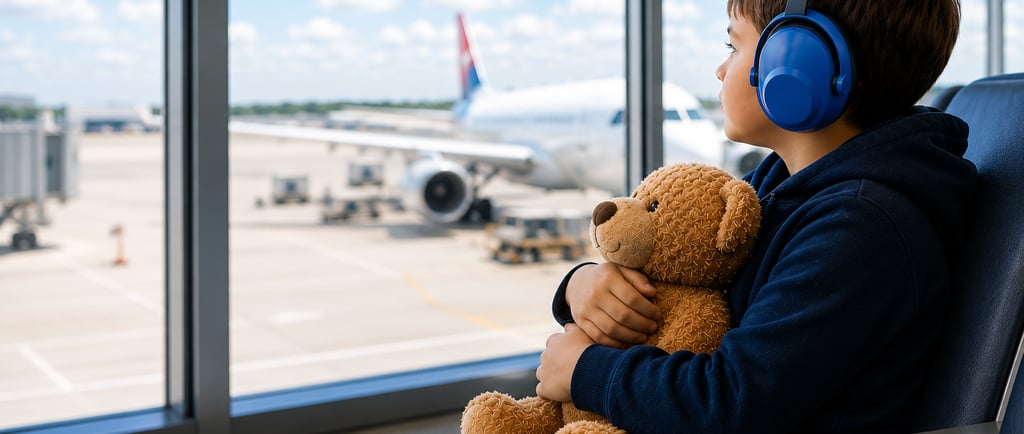
For many parents, booking a family holiday comes with one big question before you even arrive at the airport: should you tell the airline your child is autistic?
Some families worry about stigma or being treated differently. Others wonder whether informing the airline could make travelling easier and less stressful. The truth is that there is no right or wrong answer—but for many neurodiverse families, sharing information in advance can unlock valuable support and reduce travel anxiety significantly.
If you are planning your first trip abroad, our guide to travelling with a neurodiverse child includes practical preparation strategies to help autistic children feel calmer and more confident before flying.
Why Some Parents Choose to Inform Airlines
Airports and flights can be extremely overwhelming for autistic children. Bright lights, loud noises, waiting in queues, crowded terminals, changes in routine, and unfamiliar environments can all contribute to sensory overload.
By informing the airline in advance, some families gain access to support that may make the journey easier, including:
* Early boarding
* Additional assistance at the airport
* Flexible seating arrangements
* Staff awareness of sensory needs
* Help during delays or disruptions
* Access to quieter waiting areas
This type of autism airline assistance can make a huge difference when travelling with autistic children.
Many airlines are becoming increasingly aware of hidden disabilities and neurodiverse passengers. Some now provide dedicated autism support programmes and sensory-friendly initiatives. 
You Do Not Have to Share a Diagnosis
It is important to remember that you are never required to disclose detailed medical information.
Many parents simply explain that their child has additional sensory or communication needs and may require extra support during travel.
You could say:
“My child is autistic and may struggle with sensory overload and waiting times.”
Or:
“My child is neurodiverse and may need additional support during boarding.”
Keeping explanations simple and practical often works best.
What Support Can Airlines Offer?
Support varies between airlines and airports, but many now recognise that hidden disabilities require understanding and flexibility.
Some forms of assistance may include:
Priority Boarding
Early boarding allows families to settle before the aircraft becomes crowded and noisy.
For many autistic children, reducing the stress of busy boarding queues can prevent anxiety from escalating before take-off.
Seating Assistance
While airlines cannot always guarantee seating arrangements, notifying them early may improve the chances of sitting together or being placed in quieter areas where possible.
Staff Awareness
Cabin crew who are aware of your child’s needs may respond more calmly if your child becomes distressed during the flight.
This can be particularly helpful during:
* Turbulence
* Delays
* Announcements
* Take-off and landing
* Unexpected changes
Airport Assistance
Some airports offer disability assistance services that can help families move through check-in, security, and boarding more smoothly.
These services are not only for physical disabilities. Hidden disabilities and autism are increasingly recognised across UK airports.
The Benefits of Telling Airlines in Advance
For many neurodiverse families, advance communication reduces uncertainty.
When staff already understand that your child may struggle with:
* Noise
* Transitions
* Crowds
* Waiting
* Changes to routine
…it can lead to a more supportive experience overall.
Parents often report feeling less anxious themselves when airlines are informed ahead of time.
Flying with an autistic child can already feel stressful without worrying about explaining things during a meltdown or difficult moment.
Hidden Disabilities Sunflower Lanyards
Many UK airports now recognise the Hidden Disabilities Sunflower scheme.
These lanyards discreetly indicate that a passenger may need additional time, patience, or support.
Our guide to Sunflower lanyards and autism airport support explains how they can help neurodiverse families navigate airports more comfortably.
Using a lanyard does not guarantee special treatment, but it can help staff recognise when extra understanding may be needed.
British Airways and Autism Support
Some airlines are developing autism-specific initiatives to support neurodiverse passengers.
British Airways has partnered with Heathrow Airport to create its Flight Ready Programme – Autism. The programme offers familiarisation experiences designed to help autistic passengers and their families feel more confident about flying. 
British Airways has also introduced visual guides for autistic passengers, developed with autism specialists and endorsed by the National Autistic Society. 
These types of initiatives show how seriously some airlines are beginning to take neurodiverse family travel.
Emirates and Autism-Friendly Flying
Emirates has also introduced major autism-friendly travel initiatives.
In 2025, Emirates became recognised as the world’s first Autism Certified Airline™, with tens of thousands of staff trained in autism awareness and sensory sensitivities. 
The airline has also trialled “travel rehearsal” experiences for autistic children and families to help reduce anxiety before real flights. 
For families flying long-haul, these developments may provide additional reassurance when choosing an airline.
What If You Decide Not to Tell the Airline?
Some parents prefer not to disclose their child’s diagnosis at all—and that is completely valid too.
You know your child best.
If your child:
* enjoys flying
* copes well with transitions
* does not require additional support
* dislikes labels or attention
…you may decide that informing the airline is unnecessary.
Every autistic child is different. Some children need extensive support, while others may simply benefit from quiet preparation at home.
There is no single “correct” way to approach neurodiverse family travel.
Preparing Your Child Matters Most
Whether or not you inform the airline, preparation is still the most important factor.
Helpful strategies include:
* watching airport videos
* using social stories
* practising routines
* packing sensory aids
* bringing familiar snacks and comfort items
* explaining each stage of the journey clearly
Many autistic children cope much better when they understand what to expect.
Preparation reduces uncertainty—and uncertainty is often one of the biggest triggers for anxiety.
A Supportive Travel Experience Can Change Everything
One positive flight experience can build confidence for future holidays.
Many families discover that once their child understands airports and flying, travel becomes significantly easier over time.
Autism-friendly holidays are becoming more accessible as awareness improves across airlines and airports worldwide.
While travelling with autistic children may still involve challenges, support is improving every year. 
Final Thoughts
So—should you tell airlines your child is autistic?
For many families, the answer is yes. Sharing information ahead of time can lead to additional support, calmer journeys, and reduced stress for everyone involved.
But the most important thing is choosing the approach that feels right for your family and your child’s needs.
Whether you request autism airline assistance or simply prepare quietly in advance, the goal is the same: helping your child feel safe, supported, and confident while travelling.
With preparation, patience, and understanding, flying with an autistic child can absolutely become a positive family experience.


