Managing Travel Anxiety for Neurodiverse Kids: Practical Tips for Stress-Free Family Travel
Discover expert tips on managing travel anxiety for neurodiverse kids, including autism-friendly strategies, airport support, and sensory travel hacks for calmer family holidays.
GETTING STARTED
5/2/20265 min read
Managing Travel Anxiety for Neurodiverse Kids: A Practical, Parent-Friendly GuidE
Affiliate Disclosure: This article may contain affiliate links to family travel products, sensory aids, and holiday essentials for neurodiverse children. If you purchase through these links, Holidays and Kiddos may earn a small commission at no extra cost to you
Travelling with neurodiverse children can be an incredibly rewarding experience—but it can also bring unique challenges, particularly when it comes to anxiety. From sensory overload in busy airports to unexpected changes in routine, travel can feel overwhelming for children with autism, ADHD, and other neurodivergent profiles.
The good news? With thoughtful preparation, the right tools, and a flexible mindset, family travel can become not only manageable—but enjoyable.
In this in-depth guide, we’ll explore how to manage travel anxiety for neurodiverse kids, with practical strategies you can use before, during, and after your trip.
Understanding Travel Anxiety in Neurodiverse Children
Travel anxiety is not simply “nerves”—for neurodiverse children, it often stems from deeper neurological and sensory differences.
Busy transport environments can trigger sensory overload due to noise, crowds, bright lights, and unfamiliar smells, which may lead to heightened anxiety or even meltdowns . On top of that, difficulties with communication or processing new information can make it harder for children to express their needs or cope with sudden changes.
Research also shows that crowds and unpredictability are among the biggest barriers to travel for families with neurodiverse children .
Common triggers include:
Changes to routine
Waiting times and uncertainty
Sensory overload (noise, lighting, crowds)
Transitions (home → airport → plane → hotel)
Lack of control or predictability
Understanding these triggers is the first step toward reducing anxiety.
Why Preparation is Everything
Preparation isn’t about controlling every detail—it’s about reducing uncertainty.
Experts highlight that helping children understand what to expect can significantly lower stress levels and make travel feel more predictable .
👉 For a complete step-by-step guide, read our pillar article:
https://www.holidaysandkiddos.com/preparing-your-neurodiverse-child-for-going-on-holiday-a-family-travel-guide
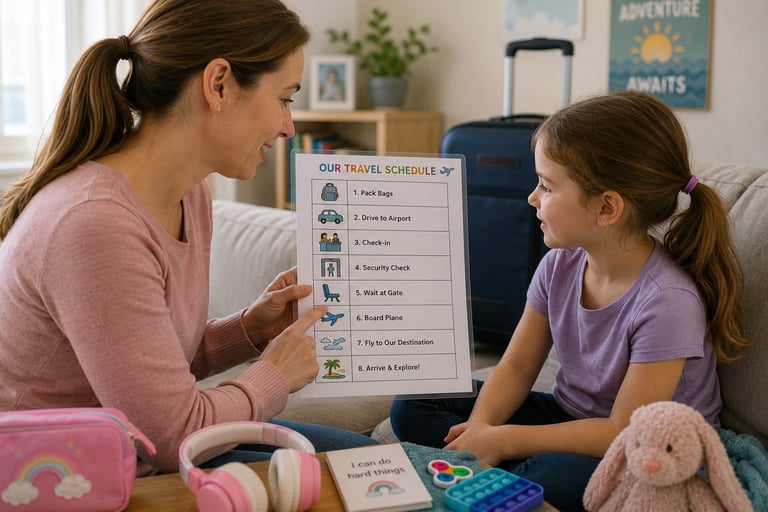
1. Use Visual Supports and Social Stories
Creating a simple “travel story” can help your child visualise the journey.
Include:
Photos of the airport, plane, or hotel
Step-by-step explanations of what will happen
Sensory expectations (e.g., “It might be loud”)
This approach helps children process upcoming experiences in a structured, reassuring way .
2. Involve Your Child in Planning
Giving children a sense of control can reduce anxiety significantly.
Try:
Letting them choose snacks or activities
Offering limited choices (window or aisle seat)
Involving them in packing
Even small decisions can make the experience feel collaborative rather than overwhelming.
Managing Anxiety Before You Travel
The days and weeks leading up to your trip are crucial.
Build Familiarity Gradually
Talk about the trip regularly—but calmly. Use videos, maps, or even virtual tours to make the destination feel familiar.
Practice Key Steps
If possible:
Visit the airport in advance
Practice going through security (role play at home)
Rehearse sitting for longer periods
Prepare for the Unexpected
Travel rarely goes exactly to plan. Preparing your child for delays or changes can help them cope when things shift.
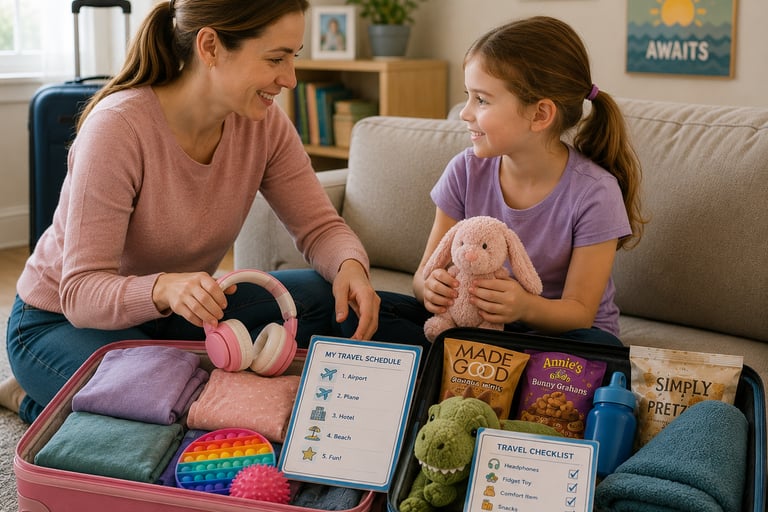
Packing for Comfort and Calm
A well-packed bag can make all the difference.
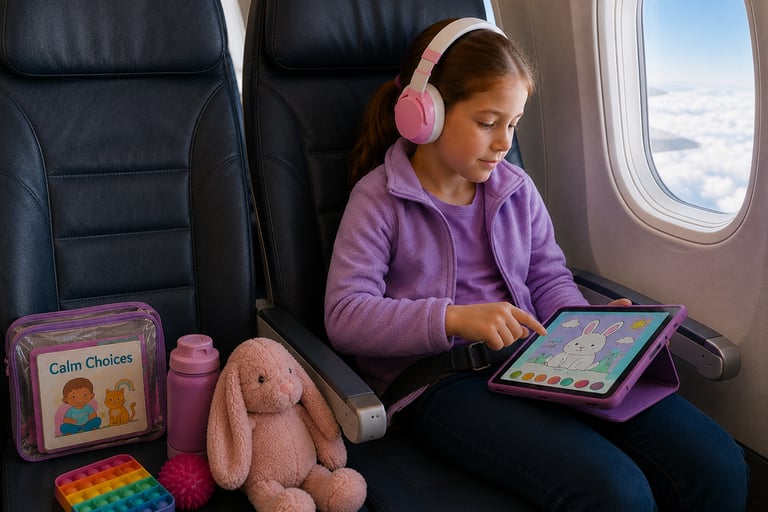
Create a “Sensory Toolkit”
This might include:
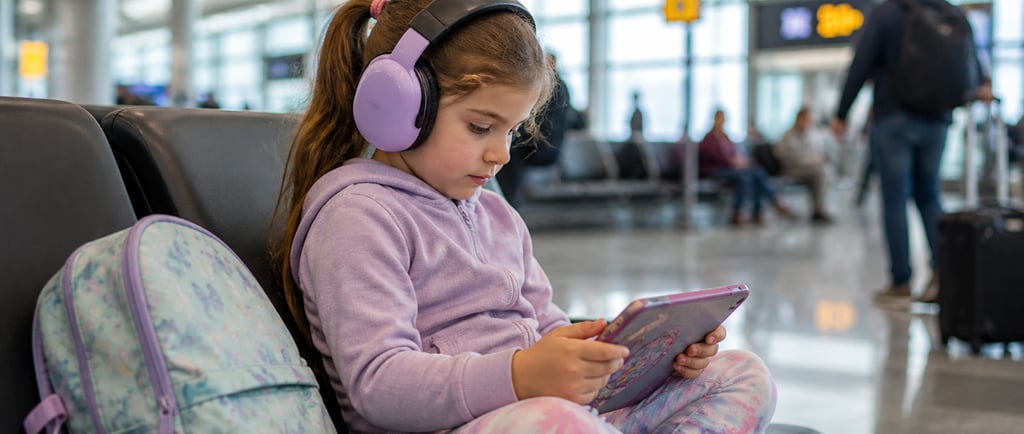
Noise-cancelling headphones
Sunglasses or caps
Fidget toys
Comfort items
These tools help children regulate sensory input and feel more in control .
Bring Familiar Foods
Food predictability matters. Having favourite snacks on hand can reduce stress during unfamiliar mealtimes .
Build a Distraction Kit
A “travel toolkit” with engaging items can help children stay calm during waiting times and delays.
Navigating the Airport with Confidence
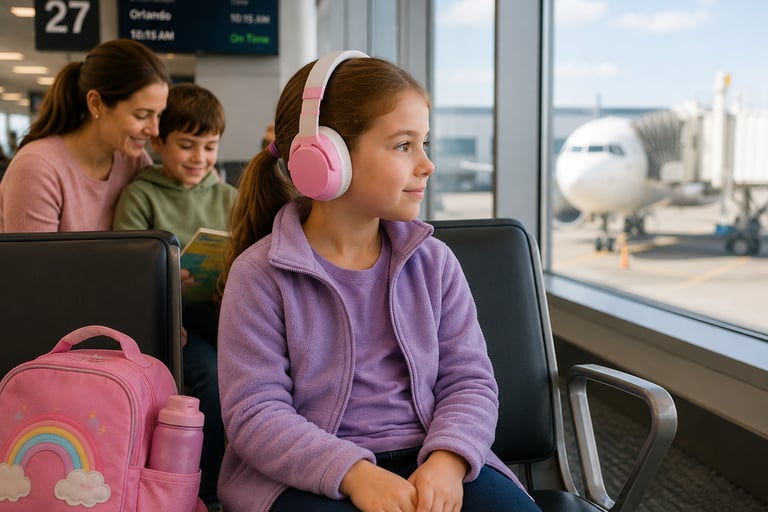
Airports are often the most overwhelming part of travel.
👉 For detailed support, check out:
https://www.holidaysandkiddos.com/supporting-your-neurodiverse-child-at-the-airport-tips-for-smooth-journey
Key strategies:
1. Arrive Early
Allow extra time to reduce pressure and avoid rushing.
2. Use Special Assistance Services
Many airports offer:
Hidden disability lanyards
Priority lanes
Quiet spaces
For example, UK airports provide tailored support for neurodivergent travellers, including visual guides and staff assistance .
3. Reduce Sensory Input
Use headphones during announcements
Seek quieter waiting areas
Limit exposure to crowded spaces where possible
During the Journey: Staying Regulated
Whether you’re flying, driving, or taking a train, the journey itself can be challenging.
Keep Structure Where Possible
Even while travelling, try to maintain familiar routines:
Snack times
Screen time rules
Sleep schedules
Offer Regular Breaks
Movement breaks, bathroom stops, or short walks can help regulate energy and reduce overwhelm.
Use Calm Communication
Simple, clear language works best:
“First we sit, then we eat”
“We’ll be there in 20 minutes”
Managing Meltdowns and High Anxiety Moments
Even with preparation, anxiety can spike.
Stay Calm and Supportive
Your response sets the tone. Speak gently and avoid overwhelming your child with too many words.
Reduce Stimuli Immediately
If possible:
Move to a quieter area
Lower noise and light exposure
Offer comfort items
Use Known Coping Strategies
Every child is different. Use techniques that already work for your child, such as:
Deep pressure (hug or weighted item)
Breathing exercises
Favourite calming activities
Choosing the Right Travel Environment
Your destination matters more than you might think.
Families with neurodiverse children often prioritise:
Less crowded destinations
Flexible accommodation
Familiar environments
Crowds and unpredictable settings are a major concern for many families when choosing where to travel .
Consider:
Off-peak travel times
Quiet accommodation
Locations with autism-friendly services
Supporting Emotional Wellbeing Throughout the Trip
Travel isn’t just about logistics—it’s about emotional safety.
Build in Downtime
Avoid over-scheduling. Balance activities with rest periods.
Follow Your Child’s Lead
Pay attention to their cues and adjust plans when needed.
Celebrate Small Wins
Every successful step—boarding a plane, trying a new activity—is worth recognising.
After the Trip: Reflect and Reinforce
Once you’re home, take time to reflect.
Talk About the Experience
Discuss:
What went well
What was difficult
What they enjoyed
Build Positive Associations
Looking at photos or creating a memory book can reinforce positive feelings about travel.
Final Thoughts: Travel Is Possible (and Worth It)
Travel with neurodiverse children may require extra planning—but it’s absolutely achievable.
The goal isn’t perfection. It’s creating a supportive, flexible environment where your child feels safe enough to explore the world.
With preparation, empathy, and the right strategies, travel can become:
A confidence-building experience
A chance for family bonding
A source of joy—not stress
And remember—you’re not alone. Thousands of families are navigating this journey too, and with each trip, it gets easier.
Ready to Plan Your Next Trip?
Start here:
👉 https://www.holidaysandkiddos.com/preparing-your-neurodiverse-child-for-going-on-holiday-a-family-travel-guide
👉 https://www.holidaysandkiddos.com/supporting-your-neurodiverse-child-at-the-airport-tips-for-smooth-journey