
Airport Assistance for Neurodiverse Kids: UK Family Travel Tips for Stress-Free Flying
Discover how airport assistance can help neurodiverse children travel with confidence. Practical UK family travel tips for autism-friendly airports, hidden disability support, and reducing travel anxiety when flying with autistic children.
TRAVELLING WITH A NEURODIVERSE CHILD
5/25/20264 min read
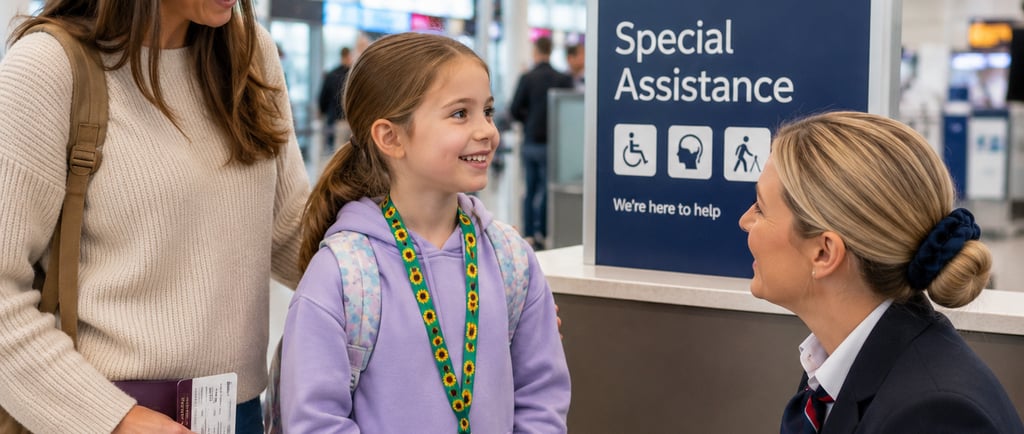
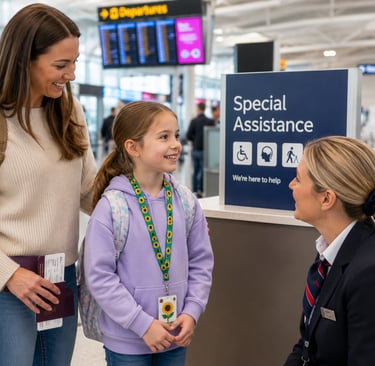
Travelling through an airport with a neurodiverse child can feel overwhelming long before you even board the plane. Busy terminals, loud announcements, security queues, unfamiliar routines, and sensory overload can quickly turn an exciting family holiday into a stressful experience.
The good news is that airport assistance services can make travelling significantly easier for families with autistic children, ADHD, sensory processing differences, or anxiety-related needs. Across UK airports, support for hidden disabilities is improving, helping families travel with more confidence and less stress.
If you’re preparing for your next trip, this guide explains how airport assistance works, how to request it, and practical ways to make flying easier for neurodiverse children.
Before booking your holiday, it’s also worth reading our pillar guide on preparing your neurodiverse child for going on holiday for strategies that can help your child feel more secure and prepared before travel begins.
Why Airports Can Be Difficult for Neurodiverse Children
Airports are highly stimulating environments. Even adults can find them stressful, so for children with sensory sensitivities or anxiety, the experience can become overwhelming very quickly.
Common airport triggers for neurodiverse children include:
Bright lighting
Large crowds
Unpredictable waiting times
Sudden announcements
Security procedures
Changes to routine
Long walking distances
Delays and transitions
Strong smells and unfamiliar environments
Many autistic children also struggle with uncertainty and lack of control. Not knowing what will happen next can increase anxiety significantly.
This is why airport assistance can be so valuable. The right support can reduce stress, improve predictability, and help the whole family feel calmer during travel.
For additional help managing travel worries, read our guide on managing travel anxiety for neurodiverse kids.
What Is Airport Assistance?
Airport assistance is a free service available at most UK airports for passengers who need additional support while travelling.
Many parents assume assistance is only for physical disabilities or wheelchair users, but this is not true. Neurodiverse children and hidden disabilities are increasingly recognised by airports and airlines.
Support can include:
Help navigating the airport
Faster or quieter security routes
Early boarding
Additional time during checks
Sensory-friendly support
Calm explanations from staff
Help during queues and transitions
Assistance getting to departure gates
At airports such as Manchester Airport, staff are trained to support travellers with autism and other non-visible disabilities. The airport also recognises the Sunflower Lanyard scheme for hidden disabilities.
How to Book Airport Assistance
One of the biggest mistakes families make is leaving assistance arrangements until the day of travel.
Most airports recommend booking assistance at least 48 hours before your flight through your airline or travel provider.
When booking assistance:
Clearly explain your child’s needs
Mention sensory sensitivities or autism
Ask about hidden disability support
Request early boarding if needed
Ask about quieter security options
Explain if your child struggles with queues or waiting
The more information you provide, the easier it is for staff to support your family appropriately.
You do not usually need a formal diagnosis to request support.
Using Sunflower Lanyards at Airports
Many UK airports participate in the Hidden Disabilities Sunflower scheme.
A sunflower lanyard discreetly signals that a passenger may need additional patience, understanding, or support.
For neurodiverse children, this can be extremely helpful during:
Security checks
Boarding
Waiting areas
Passport control
Busy queues
At Manchester Airport, sunflower lanyards are recognised throughout the terminal and can often be collected free of charge from assistance desks.
While a lanyard does not guarantee special treatment, many parents find it reduces judgement from others and helps staff respond more compassionately.
Preparing Your Child Before Travel
Preparation is one of the best ways to reduce airport anxiety for neurodiverse children.
You can help by:
Creating a Visual Schedule
Show your child each stage of the journey:
Packing
Travelling to the airport
Check-in
Security
Waiting at the gate
Boarding the plane
Visual routines can make unfamiliar experiences feel more predictable.
Watching Airport Videos
Many airports now provide accessibility videos or autism travel guides online.
Manchester Airport’s autism travel support guide includes practical information for neurodiverse passengers and families.
Practising Security Checks
Role-playing airport security at home can help children understand what to expect.
Practice:
Removing bags
Walking through scanners
Waiting in line
Listening to instructions
Packing Sensory Supports
Useful airport sensory items may include:
Ear defenders
Noise-cancelling headphones
Sunglasses
Chew toys
Fidget toys
Tablets with downloaded shows
Familiar snacks
Comfort items
Having familiar objects can help regulate anxiety during overstimulating moments.
Arriving at the Airport
Whenever possible, arrive early.
Rushing increases stress for everyone, especially neurodiverse children who may already feel anxious about transitions.
Once at the airport:
Find the assistance desk first
Explain your child’s needs calmly
Ask where quieter areas are located
Confirm boarding arrangements
Many airports now have designated quiet spaces or sensory-friendly areas, although facilities vary between airports. Some airports internationally have even introduced sensory rooms specifically designed for autistic passengers.
Going Through Security
Security is often the hardest part of the airport experience for neurodiverse children.
The combination of queues, instructions, body scanners, noise, and unpredictability can feel overwhelming.
Airport assistance can help by:
Providing additional time
Offering quieter screening areas
Explaining procedures clearly
Supporting families through the process
At Manchester Airport, staff are trained in disability awareness and private search areas may also be available if needed.
If your child becomes distressed, stay calm and communicate openly with staff. Most airport teams are far more understanding than parents expect.
Early Boarding Can Make a Huge Difference
For many neurodiverse children, boarding a busy aircraft alongside hundreds of passengers can be overwhelming.
Early boarding allows your family to:
Settle calmly
Organise sensory items
Avoid crowded aisles
Reduce transition anxiety
Prepare your child gradually
Many airlines will offer this if requested in advance.
Remember That Every Child Is Different
There is no “perfect” way to travel with a neurodiverse child.
Some children may benefit greatly from airport assistance, while others may prefer independence and minimal interaction.
The key is understanding your child’s triggers, planning ahead, and using support services in a way that suits your family.
Travelling with autistic children may require more preparation and flexibility, but holidays can still be enjoyable, enriching, and memorable experiences.
With the right support, airports become far less intimidating — and your family can focus more on making positive travel memories together.
Useful Resources
Sources
Manchester Airport Assisted Travel and Autism Support Resources.

