
All-Inclusive vs Self-Catering Holidays With a Neurodiverse Child: Which Is Best for Your Fa
Exploring all-inclusive hotels versus self-catering accommodations for families traveling with a neurodiverse child. We discuss the pros and cons of each option, focusing on sensory-friendly amenities and flexibility. Discover valuable insights to ensure your family vacation is enjoyable and tailored to meet diverse needs.
ACCOMMODATION AND PLANNING
Planning a family holiday with a neurodiverse child can feel both exciting and overwhelming. Whether your child is autistic, has ADHD, sensory processing differences, or additional needs, travel often requires more preparation, flexibility, and understanding than a typical family holiday.
For many parents, questions start long before booking flights:
Will the environment be too overwhelming?
Can we maintain our child’s routine?
Will food be an issue?
Is the accommodation suitable for sensory needs?
Will the journey itself be manageable?
The good news is that with thoughtful planning, family travel can absolutely become enjoyable and rewarding.
Before deciding between accommodation types, it’s helpful to start with a strong foundation. Our pillar guide, Preparing Your Neurodiverse Child for Going on Holiday: A Family Travel Guide, explains how to prepare your child for travel, reduce anxiety, and create smoother holiday experiences.
In this guide, we’ll explore the pros and cons of all-inclusive holidays versus self-catering holidays for neurodiverse families, helping you decide which option best suits your child’s needs — and your own.
Affiliate Disclosure
Some links in this article may be affiliate links. This means Holidays and Kiddos may earn a small commission if you choose to make a purchase, at no extra cost to you. We only recommend products and services we genuinely believe may support families travelling with neurodiverse children.
Why Accommodation Matters for Neurodiverse Families
When planning autism-friendly holidays, accommodation is about far more than simply having somewhere to sleep.
The right environment can:
Reduce sensory overload
Support routines and structure
Create safe spaces for downtime
Prevent meltdowns and overwhelm
Make mealtimes less stressful
Help the entire family relax
The wrong environment, however, can quickly turn a holiday into a stressful experience.
If airport anxiety is one of your biggest concerns, you may also find our guide helpful:
Supporting Your Neurodiverse Child at the Airport: Tips for a Smooth Journey
All-Inclusive Holidays for Neurodiverse Families
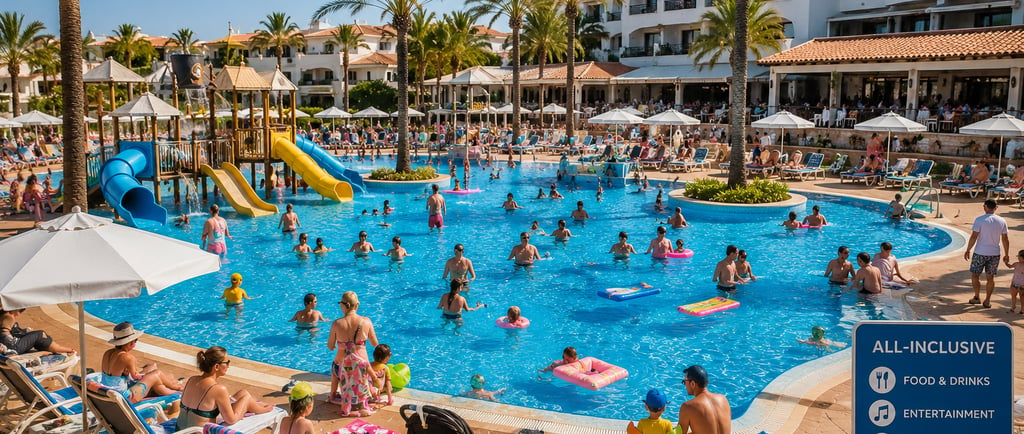
All-inclusive holidays are often viewed as the easiest option for families because meals, entertainment, and facilities are all available in one place.
For many parents of neurodiverse children, this convenience can significantly reduce stress.
Benefits of All-Inclusive Holidays
1. Less Planning and Decision-Making
One of the biggest advantages of all-inclusive resorts is simplicity.
Meals, snacks, drinks, and activities are already organised, which reduces the mental load for parents already managing sensory needs, routines, and transitions.
For exhausted parents, not having to constantly think about food or daily logistics can feel like a genuine break.
2. Predictable Daily Structure
Many autistic children and neurodiverse children thrive on routine and predictability.
Resorts often follow consistent schedules:
Breakfast at the same time
Daily entertainment routines
Kids’ club activities
Evening shows
Familiar surroundings
This consistency can help children feel more secure.
3. Easy Access to Activities
Most family resorts provide:
Swimming pools
Playgrounds
Evening entertainment
Kids’ activities
On-site restaurants
This means you don’t need to travel constantly between activities, which can reduce stress and sensory overwhelm.
4. Parents Get a Break Too
Not cooking, cleaning, or planning every meal allows parents to spend more quality time together as a family.
For many neurodiverse families, reducing daily responsibilities can make holidays feel more manageable.
Challenges of All-Inclusive Holidays
Although all-inclusive holidays work brilliantly for some families, they may not suit every child.
1. Sensory Overload
Large resorts can be busy, loud, and overstimulating.
Common triggers may include:
Loud music
Crowded dining halls
Busy swimming pools
Evening entertainment
Queueing
Bright lighting
For children with sensory sensitivities, these environments can quickly become overwhelming.
Families looking for calmer destinations may benefit from reading:
Family Travel in Morocco: Essential Tips for Visiting With Neurodiverse Kids
2. Food Can Still Be Difficult
Although resorts often offer variety, buffet-style dining can feel overwhelming for selective eaters or children with sensory-based food aversions.
Children who rely on familiar “safe foods” may still struggle despite the large selection.
3. Fixed Mealtimes and Schedules
Some children need flexibility around eating, sleeping, and downtime.
Strict restaurant opening times or entertainment schedules may create additional pressure for families trying to maintain routines.
4. Limited In-Room Facilities
Many hotel rooms only include basic amenities such as a kettle or mini fridge.
This can make preparing familiar meals or snacks difficult.
Self-Catering Holidays for Neurodiverse Families
For many families travelling with autistic children or neurodiverse children, self-catering holidays offer greater flexibility and control.
Benefits of Self-Catering Holidays
1. Complete Control Over Food
Food anxiety is extremely common in neurodiverse children.
Self-catering accommodation allows parents to:
Prepare familiar meals
Maintain routines
Shop for preferred brands
Avoid stressful buffet environments
Reduce mealtime anxiety
This alone can make holidays feel significantly easier.
2. Flexible Daily Routine
Self-catering holidays allow families to completely structure the day around their child’s needs.
You can:
Eat when your child is hungry
Take breaks when needed
Avoid overstimulating environments
Prioritise downtime
This flexibility often helps reduce travel anxiety and meltdowns.
3. Quieter Environments
Apartments, villas, and smaller accommodations are often far quieter than busy resorts.
For children sensitive to:
Noise
Crowds
Bright lighting
Busy communal spaces
…this calmer environment can make a huge difference.
4. Space to Decompress
Downtime is essential for many neurodiverse children.
Having private space allows children to:
Self-regulate
Recharge after outings
Use sensory tools
Recover from overstimulation
If meltdowns during travel are a concern, our guide:
Coping With Meltdowns at 40,000 Feet: A Family Travel Guide for Parents of Neurodiverse Children
includes practical sensory strategies for travelling families.
Challenges of Self-Catering Holidays
1. More Planning Is Required
Self-catering holidays require additional preparation:
Grocery shopping
Meal planning
Researching restaurants
Organising activities
Transport planning
For some parents, this extra responsibility can feel exhausting.
2. Daily Responsibilities Continue
Cooking and cleaning still need to be done.
Although this offers greater control, it may not always feel like a true break for parents.
3. Less Built-In Entertainment
Unlike resorts, self-catering accommodation rarely includes organised entertainment or activities.
Families may need to create their own structure and outings.
4. It Can Feel Isolating
Some families enjoy the quieter atmosphere, while others miss the social side of resorts and shared family spaces.
How to Choose the Right Holiday Style for Your Family
There is no universal “best” option when travelling with neurodiverse children.
Instead, ask yourself:
What Are Your Child’s Sensory Needs?
Do they struggle with crowds and noise?
Do they need quiet spaces regularly?
Are they sensory seeking or sensory avoidant?
How Important Is Food Flexibility?
Does your child rely on familiar foods?
Are mealtimes a source of anxiety?
How Much Structure Does Your Child Need?
Do they prefer strict routines?
Or are they comfortable with flexibility?
What Helps You Feel Less Stressed?
Some parents relax more with:
Less planning
Resort convenience
Organised entertainment
Others feel calmer when they have:
More control
Flexible routines
Quiet surroundings
Your needs matter too.
A Hybrid Option May Work Best
For many neurodiverse families, the ideal solution sits somewhere in the middle.
You might choose:
A quieter resort with apartment facilities
A villa within a resort complex
An autism-friendly hotel
A smaller family resort with flexible dining
Destinations like Agadir are becoming increasingly popular for autism-friendly holidays from the UK because they offer a balance of structure, calm, and spacious accommodation.
You may also enjoy:
Are There Autism-Friendly Holidays in Morocco?
Final Thoughts: There’s No Right or Wrong Choice
Every neurodiverse child is different.
For some families, all-inclusive holidays provide the structure and simplicity needed for a relaxing break. For others, self-catering accommodation offers the calm, flexibility, and control that helps everyone feel comfortable.
The best family holidays are not about perfection — they are about creating an environment where your child feels safe, supported, and able to enjoy the experience.
With thoughtful preparation and realistic expectations, travelling with a neurodiverse child can become not only manageable but genuinely enjoyable

