
Lapland with an Autistic Child: Is It Worth It? | Sensory Friendly Lapland Guide for Families
Planning a Lapland autism family holiday? Discover whether Lapland is sensory friendly for autistic children, plus practical travel tips, accommodation advice, and family-friendly activities for neurodiverse families.
5/18/20265 min read
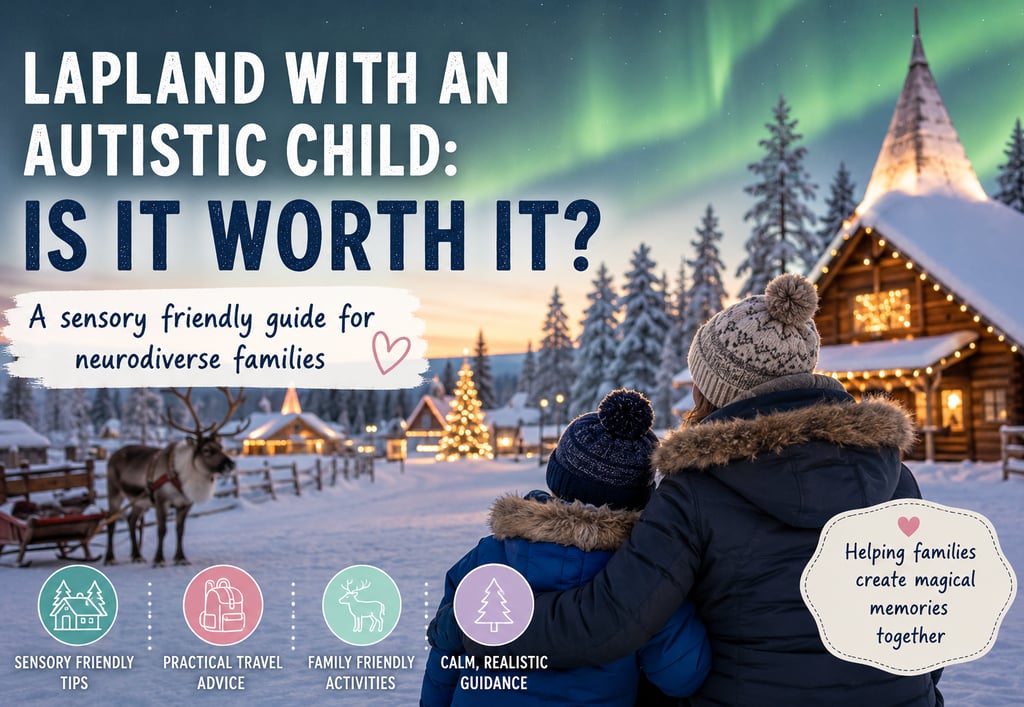
Lapland with an Autistic Child: Is It Worth It?
Affiliate Disclaimer
This article may contain affiliate links. If you book through these links, Holidays and Kiddos may earn a small commission at no extra cost to you. We only recommend destinations, products, and services we genuinely believe may help families travelling with neurodiverse children.
Lapland with an Autistic Child: Is It Worth It?
For many families, visiting Lapland is the ultimate childhood dream. Snow-covered forests, magical reindeer sleigh rides, Santa’s village, husky adventures, and the possibility of seeing the Northern Lights can create memories that last a lifetime. But when planning a Lapland autism family holiday, many parents understandably wonder whether the experience will be magical, overwhelming, or somewhere in between.
The reality is that Lapland can be an incredible destination for autistic and neurodiverse children — especially with the right preparation. In fact, many families find that the quieter pace, snowy landscapes, and outdoor activities make Lapland feel calmer than traditional family resorts. Before booking, it is worth reading our guide on travelling with a neurodiverse child, which includes practical strategies for reducing anxiety and preparing for unfamiliar environments. Check out Trip.com for the latest deals.
Why Lapland Can Work Well for Neurodiverse Families
Calm and Predictable Surroundings
One reason Lapland works surprisingly well for some autistic children is the environment itself. Unlike noisy city breaks or crowded beach resorts, Lapland is often peaceful, spacious, and heavily connected to nature.
Snow creates a softer sensory environment by reducing noise and limiting visual clutter. Forests, frozen lakes, and cosy cabins can feel much calmer than brightly lit tourist hotspots. For some children, this makes Lapland one of the most naturally sensory friendly Lapland destinations available.
The slower pace can also help reduce pressure on families. Rather than rushing between attractions, many Lapland holidays focus on spending time outdoors, exploring nature, and enjoying simple experiences together.
Outdoor Activities Can Feel Less Overwhelming
Many autistic children struggle in environments with loud music, crowded entertainment areas, or overstimulating activities. Lapland holidays are usually centred around outdoor experiences instead.
Popular activities include:
Reindeer sleigh rides
Husky experiences
Tobogganing
Snow play
Gentle forest walks
Visiting Santa
Northern Lights excursions
Outdoor movement can help many children regulate emotionally and physically. Instead of expecting children to sit still or follow strict schedules, Lapland activities often allow more freedom and space.
Families looking for activity inspiration can explore family-friendly attractions in Lapland before booking.
Christmas Magic Without the Chaos
For children who love Christmas, Lapland can feel genuinely magical. Unlike crowded shopping centres or busy UK Santa experiences, many Lapland resorts offer quieter and more personalised Santa visits.
Private or small-group Santa experiences are common, reducing:
Queueing
Loud crowds
Bright indoor environments
Waiting times
Social pressure
This calmer setting can make the experience far more enjoyable for neurodiverse children who struggle in busy festive environments.
If you are considering a festive trip, our detailed guide to Lapland holidays for neurodiverse families includes accommodation ideas, sensory tips, and practical planning advice. Check out the latest deals for Lapland HERE
The Challenges of Visiting Lapland with an Autistic Child
While Lapland can be wonderful, it is important to be realistic about the potential challenges too.
The Journey Can Be Exhausting
Even though Lapland is relatively accessible from the UK, travel days can still feel long and overwhelming.
Potential stress points include:
Busy airports
Security queues
Early flights
Flight delays
Waiting times
Transfers in snowy conditions
Disrupted meal routines
For some neurodiverse children, the airport experience may actually be harder than the holiday itself.
Preparing children for the journey in advance can help significantly. Visual schedules, airport videos, sensory supports, and regular breaks can all reduce anxiety.
Extreme Cold Can Create Sensory Issues
Lapland temperatures regularly drop below freezing, sometimes reaching -20°C or lower.
For autistic children with sensory sensitivities, winter clothing can feel uncomfortable or distressing.
Common difficulties include:
Thick coats
Gloves
Thermal layers
Snow boots
Wet clothing
Cold textures
Parents often find it helpful to practice wearing winter clothing before travelling. Soft thermal layers, tag-free clothing, and familiar textures can make a big difference.
Routine Changes May Trigger Anxiety
Lapland holidays are exciting, but they can also be intense. Many families try to fit too much into a short trip, leading to exhaustion and emotional overload.
Children may struggle with:
Different sleeping environments
Irregular meal times
Constant transitions
Busy schedules
Emotional excitement
Lack of downtime
Even positive excitement can become overwhelming.
One of the most helpful things parents can do is slow the pace down. You do not need to book every activity available. Some of the best moments often come from simply sitting in a warm cabin watching snowfall together.
Choosing the Right Lapland Holiday
Not all Lapland holidays are created equally. Some resorts are large, busy, and heavily commercialised, while others are quieter and more suited to neurodiverse families.
Consider Smaller Resorts
Smaller resorts often provide:
Quieter surroundings
Fewer crowds
More flexible schedules
Better opportunities for downtime
More relaxed dining experiences
These factors can significantly reduce stress levels for autistic children.
Cabin Accommodation May Work Better
Many families find that private cabins work far better than busy hotels.
Cabins provide:
Private space
Quiet evenings
Flexible meal routines
Easier sleep environments
Outdoor access
After stimulating activities, having somewhere calm to retreat to can make an enormous difference.
Keep Expectations Realistic
Social media often shows picture-perfect Lapland holidays, but the reality of travelling with neurodiverse children is different.
Your holiday may include:
Meltdowns
Refused activities
Changes of plan
Emotional exhaustion
Sensory overwhelm
That does not mean the holiday has failed.
For many families, success simply means creating moments of joy and connection — even if everything does not go perfectly.
Is Lapland Sensory Friendly?
For many autistic children, yes.
Lapland can feel calmer than traditional tourist destinations because of its:
Open space
Natural surroundings
Reduced traffic noise
Predictable snowy scenery
Slower pace
Outdoor focus
However, there can still be sensory triggers, including:
Snowmobiles
Bright Christmas lights
Crowded Santa villages
Airport noise
Cold weather discomfort
Balancing exciting activities with quiet downtime is often the key to a successful trip.
Practical Tips for a Successful Lapland Autism Family Holiday
Prepare Early
Preparation is essential for reducing anxiety.
Helpful preparation tools include:
Social stories
Videos
Photos
Weather discussions
Packing practice
Visual itineraries
Families preparing for international travel may also benefit from reading our guide on how to prepare neurodiverse children for holidays.
Bring Familiar Sensory Supports
Helpful items may include:
Ear defenders
Favourite snacks
Comfort toys
Fidget items
Blankets
Tablets
Sunglasses for snow glare
Familiar items can help children feel safe and regulated in unfamiliar surroundings.
Do Not Overschedule
You do not need to do every excursion.
Many families find that one planned activity per day is enough, particularly for younger children or those with sensory sensitivities.
Downtime is just as important as excursions.
Is Lapland Worth It?
For many neurodiverse families, absolutely.
Parents often describe Lapland as:
More peaceful than expected
Easier than busy summer resorts
Calmer than theme parks
Emotionally rewarding
Truly magical
Children may not remember every excursion, but they may remember:
Feeding reindeer
Watching snowfall
Meeting Santa
Sitting by a fire
Playing in deep snow
Those moments can become lifelong family memories.
If you are considering booking, browsing Lapland family holiday reviews and travel ideas can help you decide which resort or experience best suits your child’s needs.
Final Thoughts
So, is Lapland with an autistic child worth it?
For many families, yes — especially when expectations are realistic and the holiday is planned with flexibility in mind.
Lapland offers something many destinations cannot:
Quiet
Nature
Space
Simplicity
Magical winter experiences
While there may still be difficult moments, many neurodiverse families find Lapland far more manageable than they expected.
With preparation, sensory awareness, and plenty of downtime, a Lapland autism family holiday can become an unforgettable experience for the whole family.
Click here to Get started planning you lapland adventure today

