
Lost Baggage with an Autistic Child: What to Do & How to Prepare
: Learn what to do if your luggage is delayed or lost when travelling with a neurodiverse child. Practical tips on hand luggage, replacing essentials abroad, airline compensation and reducing travel stress
TRAVELLING WITH A NEURODIVERSE CHILD
7/24/20264 min read
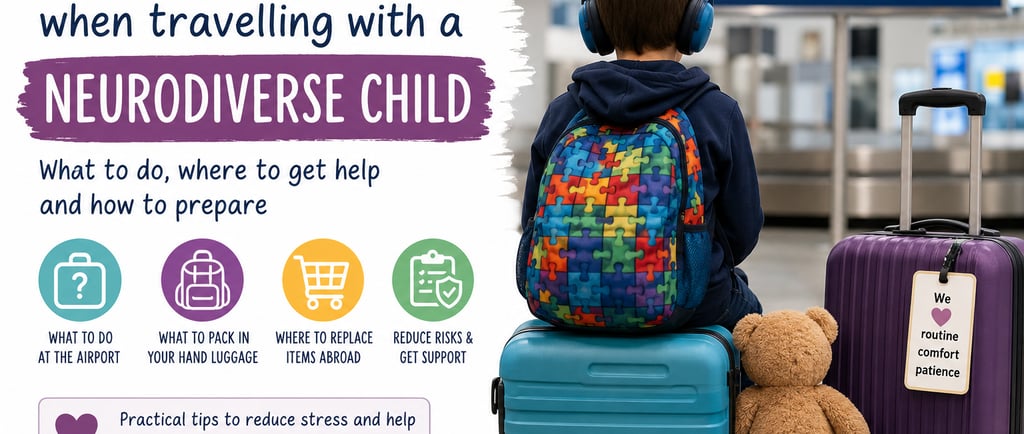
Although no one can completely prevent delayed or lost baggage, there are several simple steps you can take to make it much less stressful if it does happen.
Over the years, I've realised that it's not about expecting the worst—it's about being prepared enough that a travel hiccup doesn't derail the entire holiday.
## 1. Use a Luggage Tracker
Bluetooth luggage trackers, such as Apple AirTags or similar devices, have become increasingly popular with travellers.
Placing one inside each suitcase allows you to see its last known location using your smartphone.
While a tracker won't stop your luggage from being delayed, it can:
- Give you peace of mind.
- Help you see whether your bag has arrived at your destination.
- Provide useful information when speaking to your airline.
- Reduce the uncertainty of not knowing where your suitcase is.
For many parents, simply knowing where the suitcase is can significantly reduce anxiety.
---
## 2. Label Every Suitcase Clearly
It sounds obvious, but many bags look remarkably similar.
Make sure each suitcase has:
- A sturdy luggage tag.
- Your name.
- A mobile telephone number.
- An email address.
- Your destination accommodation (if appropriate).
It's also a good idea to place another label inside the suitcase in case the external tag becomes detached.
---
## 3. Photograph Your Luggage
Before checking your bags, take a quick photograph.
Include:
- The entire suitcase.
- Any distinctive stickers or straps.
- The luggage tag if possible.
If you need to describe your suitcase to the airline later, having a recent photograph is much easier than trying to remember every detail.
---
## 4. Choose Bright Luggage or Straps
A colourful suitcase or luggage strap doesn't just make your bag easier to spot on the carousel.
It also makes it easier for airline staff to identify if it's delayed.
If your suitcase is black, consider adding:
- A brightly coloured luggage strap.
- Colourful ribbon.
- Personalised luggage tag.
- Distinctive luggage cover.
---
## 5. Split Your Belongings
One of my favourite travel tips is to divide everyone's clothes between suitcases.
For example:
- Half of your child's clothes in one suitcase.
- The other half in another.
That way, if one suitcase is delayed, nobody is left without everything they need.
It takes a few extra minutes while packing but can make a huge difference.
---
## 6. Keep Essentials in Your Cabin Bag
As we discussed in Part 2, anything your child cannot comfortably manage without for the first 24 hours should travel with you.
That includes:
- Medication.
- Comfort items.
- Ear defenders.
- Electronics.
- Chargers.
- Snacks.
- Spare clothes.
- Toiletries.
- Important documents.
Our article Supporting Your Neurodiverse Child at the Airport: Tips for a Smooth Journey includes even more practical advice for making airport days less stressful.
---
## 7. Make Sure You Have Travel Insurance
Travel insurance is something I hope we never need, but I'm always glad we've arranged it.
Policies vary, but many include cover for:
- Delayed baggage.
- Lost baggage.
- Damaged baggage.
- Emergency purchases.
- Personal belongings.
Before travelling, check:
- How long your baggage must be delayed before you can claim.
- Spending limits.
- Which receipts you'll need to keep.
- Time limits for making a claim.
It's always worth reading the policy before you leave rather than trying to understand it while standing in an airport arrivals hall.
---
# Frequently Asked Questions
## How long before luggage is considered lost?
Every airline has its own procedures, but luggage is usually treated as delayed first while searches are carried out.
Many delayed bags are returned within 24 to 48 hours.
If the airline cannot locate your luggage after an extended search, it may eventually be declared lost, allowing compensation claims to begin.
---
## Will the airline pay for replacement clothes?
Most airlines will reimburse reasonable essential purchases while your baggage is delayed.
This usually includes items such as:
- Basic clothing.
- Toiletries.
- Essential baby products.
Keep every receipt and always follow your airline's guidance.
---
## What if my child's medication is in the missing suitcase?
Contact the airline immediately and speak to a local pharmacist or doctor if replacement medication is required.
This is why medication should always travel in your hand luggage whenever possible.
---
## Can I claim through both the airline and my travel insurance?
Sometimes, yes.
In many cases you'll need to claim from the airline first before contacting your travel insurer for any remaining eligible costs.
Always check your policy wording carefully.
---
## What if my child becomes upset because their comfort item is missing?
This is one of the hardest situations for many neurodiverse families.
Try to:
- Keep routines as familiar as possible.
- Reassure your child that their belongings are being looked for.
- Use alternative sensory supports if available.
- Introduce any replacement comfort items gently.
- Focus on familiar activities rather than the missing suitcase.
Most importantly, be kind to yourself. These situations are stressful, and it's okay if things don't go perfectly.
---
# Final Thoughts
Losing your luggage can feel like the worst possible start to a family holiday, particularly when you're travelling with a neurodiverse child.
But it doesn't have to define your trip.
A little preparation before you leave home can make an enormous difference.
Packing essential items in your hand luggage, knowing what to do at the airport and understanding where to buy replacements abroad means you'll be able to deal with the situation calmly if it ever happens.
As parents, we can't prepare for every challenge that travelling might throw at us, but we can build enough flexibility into our plans that unexpected situations become manageable rather than overwhelming.
If you're planning your next holiday, these guides from Holidays & Kiddos may also help:
- Preparing Your Neurodiverse Child for Going on Holiday: A Family Travel Guide
- The Complete Guide to Travelling with an Autistic Child
- Supporting Your Neurodiverse Child at the Airport: Tips for a Smooth Journey
- Managing Travel Anxiety for Neurodiverse Kids: Practical Tips for Stress-Free Family Travel
- Should You Tell Airlines Your Child Is Autistic?
- How to Explain Flying to a Child with Autism
- Private Villas vs Hotels: Which Is Better When Travelling with an Autistic Child Abroad?
- All-Inclusive vs Self-Catering Holidays with a Neurodiverse Child
The more prepared you feel before you travel, the more confident you'll be when unexpected situations arise—and that confidence often helps our children feel calmer too.
---
# Quick Pre-Holiday Checklist
Before every trip, take five minutes to check that you have:
☐ Medication in your hand luggage
☐ Comfort items packed in your cabin bag
☐ Ear defenders or sensory aids
☐ Chargers and downloaded entertainment
☐ Spare clothes for every family member
☐ Travel insurance documents
☐ Copies of prescriptions
☐ Photos of your suitcases
☐ Luggage labels attached
☐ Bluetooth luggage tracker (if using one)
☐ Airline baggage reference numbers saved (if needed)
With these simple steps complete, you'll be in a much stronger position to handle delayed luggage should it ever happen—leaving you free to focus on what really matters: making wonderful family memories together.

