Creating Child-Centred Holidays for Neurodiverse Families | Autism Travel Tips UK
Discover practical tips for planning child-centred holidays for neurodiverse families. Learn how to reduce travel anxiety, choose autism-friendly destinations, and create stress-free family holidays
GETTING STARTED


Affiliate Disclosure: Some links in this article may be affiliate links. This means Holidays and Kiddos may earn a small commission if you choose to make a purchase, at no extra cost to you. We only recommend products and services we genuinely believe may support families travelling with neurodiverse children.
Travelling with neurodiverse children can feel overwhelming at first, but with the right planning, family holidays can become some of your most rewarding experiences together. Whether your child is autistic, has ADHD, sensory processing differences, or simply struggles with unfamiliar environments, creating a child-centred travel experience can reduce stress and make holidays more enjoyable for the entire family.
At Holidays and Kiddos, we believe travel should feel accessible, supportive, and exciting for every family. By slowing down, prioritising your child’s needs, and planning with flexibility, you can create meaningful memories without unnecessary pressure.
If you’re just beginning your travel journey, start with our pillar guide: Preparing Your Neurodiverse Child for Going on Holiday: A Family Travel Guide.
Understanding Your Child’s Needs Before You Travel
Before booking flights or planning activities, take time to think about what helps your child feel calm, safe, and regulated.
Every neurodiverse child experiences the world differently. Some children thrive in busy environments full of stimulation, while others feel overwhelmed by crowds, noise, and constant transitions.
Common travel challenges for neurodiverse children include:
Changes in routine
Sensory overload
Long waiting times
Sleep disruption
Anxiety around unfamiliar places
Difficulty with transitions
Understanding your child’s specific needs allows you to build a holiday around them instead of expecting them to adapt to a stressful environment.
This is especially important for autistic children, who may struggle with unpredictability or sudden changes in plans. Our guide on Reducing Travel Anxiety for Neurodiverse Children includes practical strategies for helping children feel more secure before and during travel.
Involve Your Child in Holiday Planning
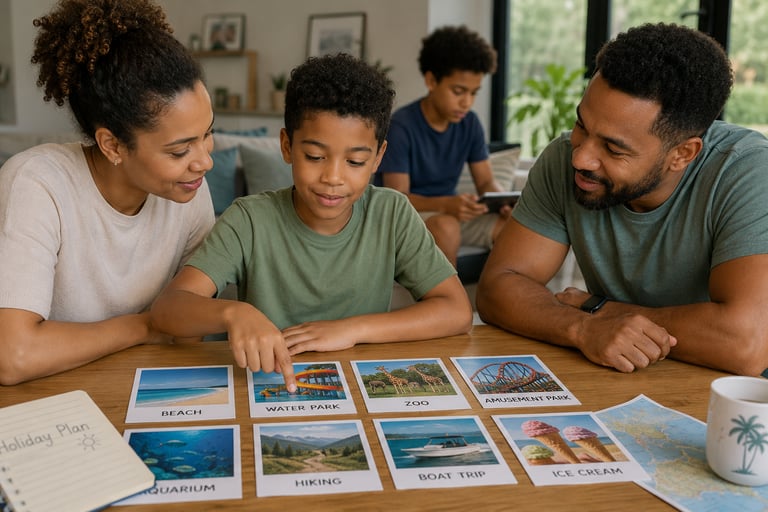
Giving children some involvement in planning can reduce anxiety and build excitement.
Try using:
Visual schedules
Interactive maps
Destination photos
YouTube hotel walkthroughs
Picture-based itineraries
Previewing the experience before travelling helps children understand what to expect. This can significantly reduce stress and sensory overwhelm.
Even small choices can help children feel more in control:
Choosing between two activities
Picking snacks for the journey
Selecting a comfort item to bring
Helping pack sensory tools
Choosing Autism-Friendly Destinations
The destination itself can make a huge difference when travelling with neurodiverse children.
Many families find calmer, slower-paced locations easier to manage than busy city breaks or highly structured sightseeing holidays.
Increasingly, destinations across Europe are becoming more autism-friendly by offering:
Quiet hours
Sensory rooms
Priority queues
Trained staff
Calm spaces
Noise-reducing headphones
Nature-based destinations are often particularly successful for neurodiverse families because they provide sensory regulation without excessive stimulation.
Some excellent options include:
Beach resorts
Forest retreats
Farm stays
Quiet coastal towns
Spacious all-inclusive resorts
If you’re considering Morocco, our guide to Autism-Friendly Holidays in Morocco explains why destinations like Agadir can work well for neurodiverse families.
You can also read:
Family Travel in Morocco: Essential Tips for Visiting with Neurodiverse Kids
Best Things to Do in Agadir for Families and Neurodiverse Kids
Letting Your Child Help Shape the Itinerary
A child-centred holiday does not mean giving children complete control over the trip. Instead, it means creating opportunities for choice and flexibility.
Allowing children to help shape the itinerary can:
Reduce anxiety
Increase engagement
Encourage independence
Build confidence
Prevent overwhelm
For example, instead of planning full days packed with activities, offer simple choices:
Beach or pool?
Nature walk or quiet café?
Museum or playground?
Early dinner or hotel downtime?
This approach is particularly effective for children who struggle with transitions or uncertainty.
It can also benefit siblings by encouraging empathy and collaboration within the family.
Creating Predictability While Travelling
Although flexibility is important, structure still matters.
Many neurodiverse children feel safest when they understand the general rhythm of the day.
Try creating a loose routine:
Breakfast
Morning activity
Quiet time
Afternoon outing
Dinner
Wind-down time
You do not need a rigid schedule, but maintaining familiar patterns can help children feel grounded in unfamiliar environments.
Visual timetables are especially useful during travel and can help prevent meltdowns linked to uncertainty or sensory overload.
For airport-specific support, read:
Supporting Your Neurodiverse Child at the Airport: Tips for a Smooth Journey
Choosing Autism-Friendly Accommodation
Accommodation plays a huge role in how successful a holiday feels.
Many hotels and resorts now cater more effectively to neurodiverse families by offering:
Quiet rooms
Blackout curtains
Sensory-friendly spaces
Flexible dining
Calm environments
Family suites
Staff trained in autism awareness
When booking accommodation:
Contact the hotel directly
Explain your child’s needs
Request quieter rooms away from entertainment areas
Ask about dining flexibility
Check for sensory-friendly facilities
Bringing familiar items from home can also make a huge difference:
Favourite blankets
Sensory toys
Ear defenders
Tablets
Familiar snacks
Bedtime comfort items
Small comforts can provide emotional stability during overwhelming moments.
Prioritising Downtime During Family Holidays
One of the biggest mistakes families make when travelling is over-scheduling.
Neurodiverse children often need more recovery time than neurotypical children, especially after busy outings or sensory-heavy experiences.
Downtime is not wasted time.
In fact, some of the most meaningful holiday memories come from:
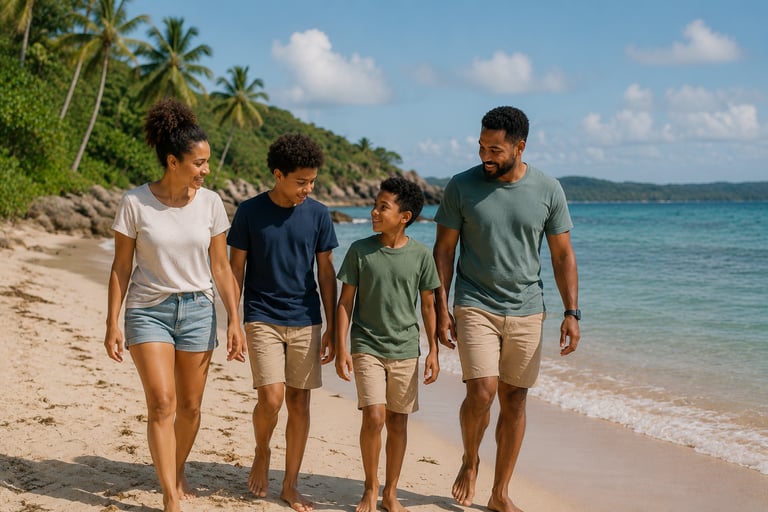
Playing in the sand
Watching waves
Quiet hotel room play
Drawing
Reading together
Exploring slowly
Unstructured play allows children to self-regulate naturally.
Packing a small sensory toolkit can also help while travelling:
Fidget toys
Stress balls
Weighted lap pads
Bubble blowers
Noise-cancelling headphones
Soft fabrics
Chewable sensory aids
Our guide on Coping With Meltdowns at 40,000 Feet includes additional sensory regulation tips for travelling families.
Self-Care for Parents Matters Too
Travelling with neurodiverse children can be emotionally demanding.
Parents often focus so heavily on managing everyone else’s needs that they forget their own wellbeing matters too.
Self-care during family travel does not need to mean luxury spa days or perfect relaxation.
Sometimes it simply means:
Drinking a coffee quietly
Taking turns with childcare
Having realistic expectations
Saying no to extra activities
Scheduling rest days
Allowing yourself flexibility
When parents feel calmer and more regulated, children often respond positively too.
Family holidays do not need to look perfect on social media to be successful.
The goal is connection, comfort, and shared experiences.
Final Thoughts: Travel Can Be Positive for Neurodiverse Families
Travelling with neurodiverse children may require extra preparation, but it can also be deeply rewarding.
By slowing down, respecting your child’s sensory needs, and building flexibility into your plans, holidays can become more enjoyable for everyone involved.
A child-centred approach to travel allows neurodiverse children to experience the world safely and confidently while helping families create stronger emotional connections.
The most successful family holidays are not always the busiest ones — they are the ones where everyone feels supported, understood, and able to enjoy the journey together.